

In this Dengarden article, Dan Blazer from Davey's Milwaukee office talks about how rock salt can damage certain plants, including dehydration, nutrient disruption and dieback.
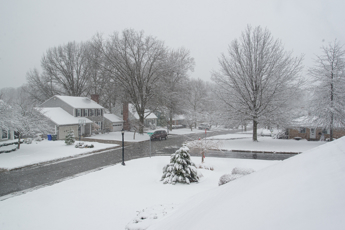 Whether you’ve experienced snow in your area this season or are expecting some in the coming weeks or months, you are probably more than likely preparing to use rock salt. Although rock salt can be helpful when melting snow (and preventing it from refreezing) so you can navigate with a vehicle or walk through snowy areas, using it near plants or your garden can be detrimental to your plants and your garden, because after all, it is salt.
Jim Lapic, a master gardener with the Penn State Master Gardener Program, notes that rock salt can harm plants at both the surface and soil levels. “If the plant is susceptible to rock salt, then you cannot use salt near it without impacting it,” he explains. “Even if you can flush the soil in the spring, there was still damage done over the winter.” Although many plants experience similar (if not identical) harmful effects from rock salt, there are some nuances to consider.
With this in mind, we chatted with gardening experts, lawn care specialists and arborists to learn more about which plants you should keep your rock salt away from throughout the winter season, and what can happen if you don’t.
To continue reading this article, click here.
For more information, contact the Milwaukee office.


The Davey Tree Expert Company provides research-driven tree services, grounds maintenance and environmental and utility infrastructure consulting for residential, utility, commercial and environmental partners in the U.S. and Canada. Established in 1880 and headquartered in Kent, Ohio, Davey has over 12,000 employees who create and deliver sustainable solutions. Davey continues to grow through expertise with the SEED Campus, its newest commitment to training, research and safety. Become part of the Davey legacy by applying today and join one of the top ten largest employee-owned companies in the U.S.
Other News Posts

What to Do After a Texas Storm Blows Through Your Yard