

The groundbreaking LTUSS (Long-Term Urban Soil Simulation) project is well underway at the SEED Campus. The primary goal of this project is to test various interventions for problems associated with urban soils where topsoil has been removed and subsoil has been compacted. Dr. Chris Fields-Johnson first proposed this project at the Davey Institute’s Research Symposium in November of 2023 and has continued to develop it since then.
The Davey Institute team planted 1,600 trees across the compacted soil plots, marking a huge milestone for this project. Five different tree species were planted: pitch-lob lolly, swamp white oak, red maple, paper birch, and tulip poplar.
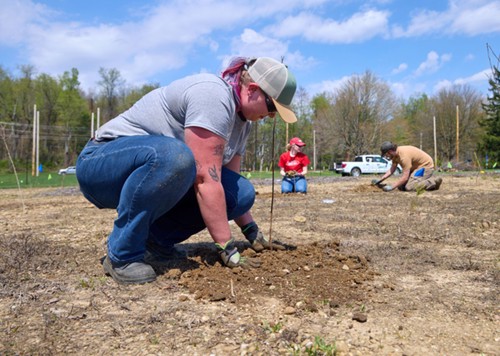
There are eight 100’ x 100’ plots in total. Four of the plots are natural, nutrient-rich soil (2.3% organic matter) that was retained when we purchased the property. The other four plots are simulated urban soil (0.7% organic matter), which was created using leftover soil and debris from the construction of the corporate office’s third wing. Within each plot, there are subplots with differing soil treatments:
- Trees with no treatment
- Arbor Green PRO®
- Polyphosphite 30
- Topdressing with compost
- Topdressing with compost + biochar
- Tillage + compost
- Tillage + compost + biochar
- Tillage + compost + biochar + vertical mulching
- Turf (to be planted in August)
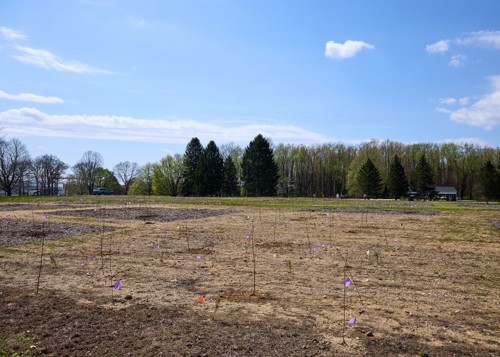
This project is truly groundbreaking, as there has never been a soil simulation done on such a large, controlled scale. “Knowing the best way to amend soils before planting trees can help save our clients a lot of money,” Dr. Grant Thompson, specialist, Davey Institute, said. “We will be able to better inform our clients so they can understand why they should invest in their soil early, as opposed to having to spend a lot more money down the line to save their trees.”
“Poor soil conditions are something our arborists have to contend with all the time in the field,” Dr. Zane Raudenbush, manager of research operations, Davey Institute, said. “Our findings over the next few years could change the way we, and our industry, view soil health.”
Dr. Raudenbush and his team will continue to monitor these trees for years to come, providing science-backed recommendations to our employees and clients based on the results of how the trees respond to the varying soil conditions.
“In addition to the unique nature of working with simulated urban soil, we will get to study these trees throughout their lifecycle from small seedlings to maturity. We can let them grow for a hundred years or more if we want to, studying their growth and physiology all the way. It is a generational opportunity for soil and tree science,” said Dr. Chris Fields-Johnson, tree conservation specialist, Davey Institute, said.


